Designing the Mediterranean Outdoor Kitchen
Why the best al fresco kitchens begin with the way you actually entertain — not the appliances.
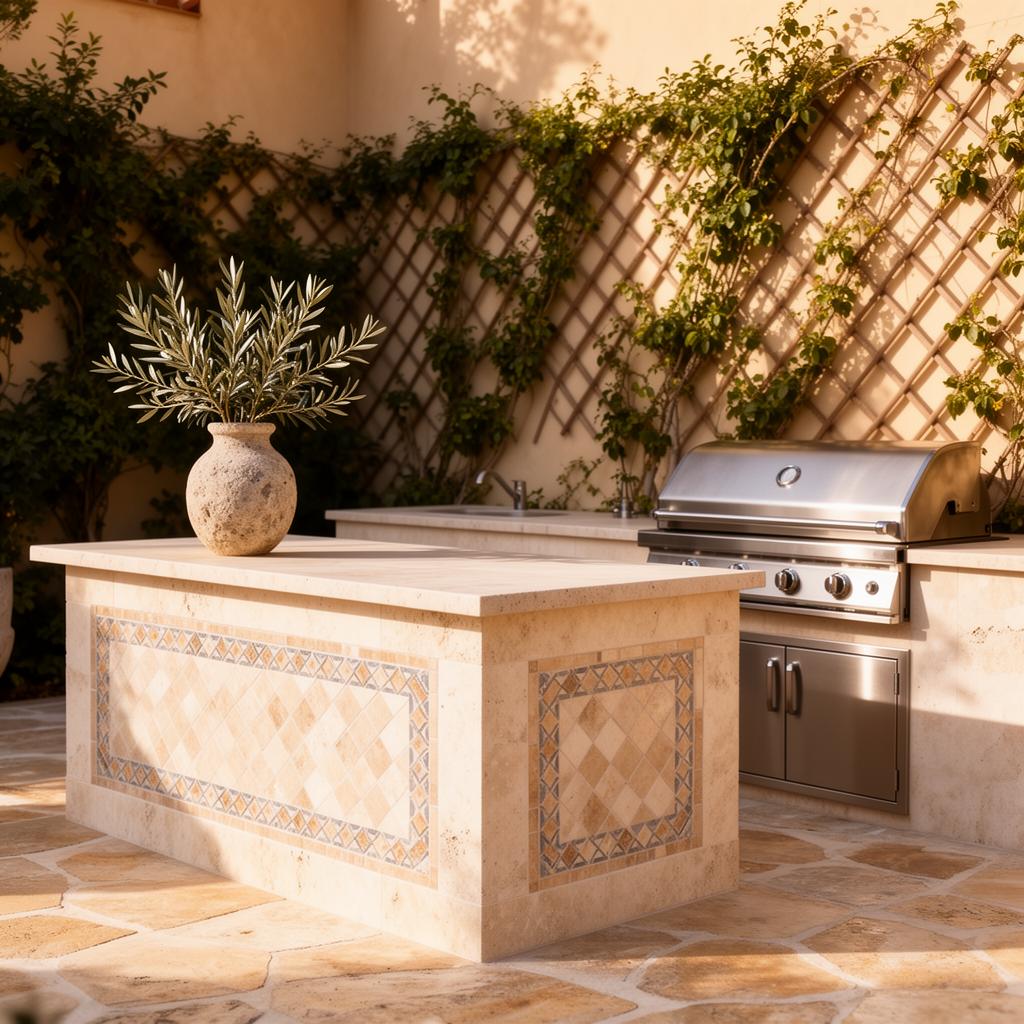
An outdoor kitchen on the Costa del Sol isn't a barbecue with a roof — it's the heart of how a villa lives between May and October. The first conversation we have with every client is never about appliances. It's about the rhythm of an evening: who arrives first, where the children sit, where the wine is poured.
From there, the architecture writes itself. Travertine counters resist sun and salt. A built-in plancha sits beside, not opposite, a 90cm grill so one host can plate while another finishes a fish. A deep undermount sink hides the working side of hospitality.
Materials matter, but proportion matters more. We design every counter to the host's exact reach, every overhang to seat guests without crowding the cook. The result is a kitchen that disappears into the terrace — quiet when empty, effortless when full.
The three-zone rule
Every kitchen we build divides into cold, hot and wet, in that order, left to right for a right-handed cook. Refrigeration and preparation first, fire in the middle, sink and waste at the end. It sounds obvious; almost no catalogue layout follows it.
Choosing the fire
Pick one hero and support it. A charcoal grill for people who cook meat seriously, a plancha for fish and vegetables, a wood-fired oven for families who want theatre and bread. Three heat sources in one run is a common brief and almost always the wrong one — the middle appliance goes unused and steals a metre of preparation space.
- Charcoal grill: unmatched flavour, needs a real ash drawer and 60cm of landing space
- Gas plancha: the workhorse; quickest to clean, best for a crowd
- Wood oven: extraordinary, but needs a flue route and a licence in most urbanisations
Details that decide whether it lasts
Salt air is the enemy. We specify 316 marine-grade stainless for anything within 500 metres of the sea, ventilate every enclosed carcass to prevent gas pooling, seal stone with a breathable impregnator rather than a film, and slope every counter one millimetre per hundred so water leaves rather than sits.
Common questions
- What is the best material for an outdoor kitchen countertop in Spain?
- Unfilled brushed travertine or dense granite. Both stay cool underfoot and in hand, tolerate UV without fading, and hide the patina of outdoor use. Avoid polished marble, which stains and gets uncomfortably hot.
- Do outdoor kitchens need ventilation?
- Yes. Any enclosed carcass containing gas appliances or bottles requires low- and high-level ventilation to prevent gas pooling, and a fire appliance under cover needs an extraction or flue route.
Planning something similar?
Book a free design consultation.
Thirty minutes with our design team — no obligation, no charge.
Book your consultation →