Infinity Pools That Belong to the Landscape
The trick isn't the vanishing edge. It's the coping, the colour and the line of sight.
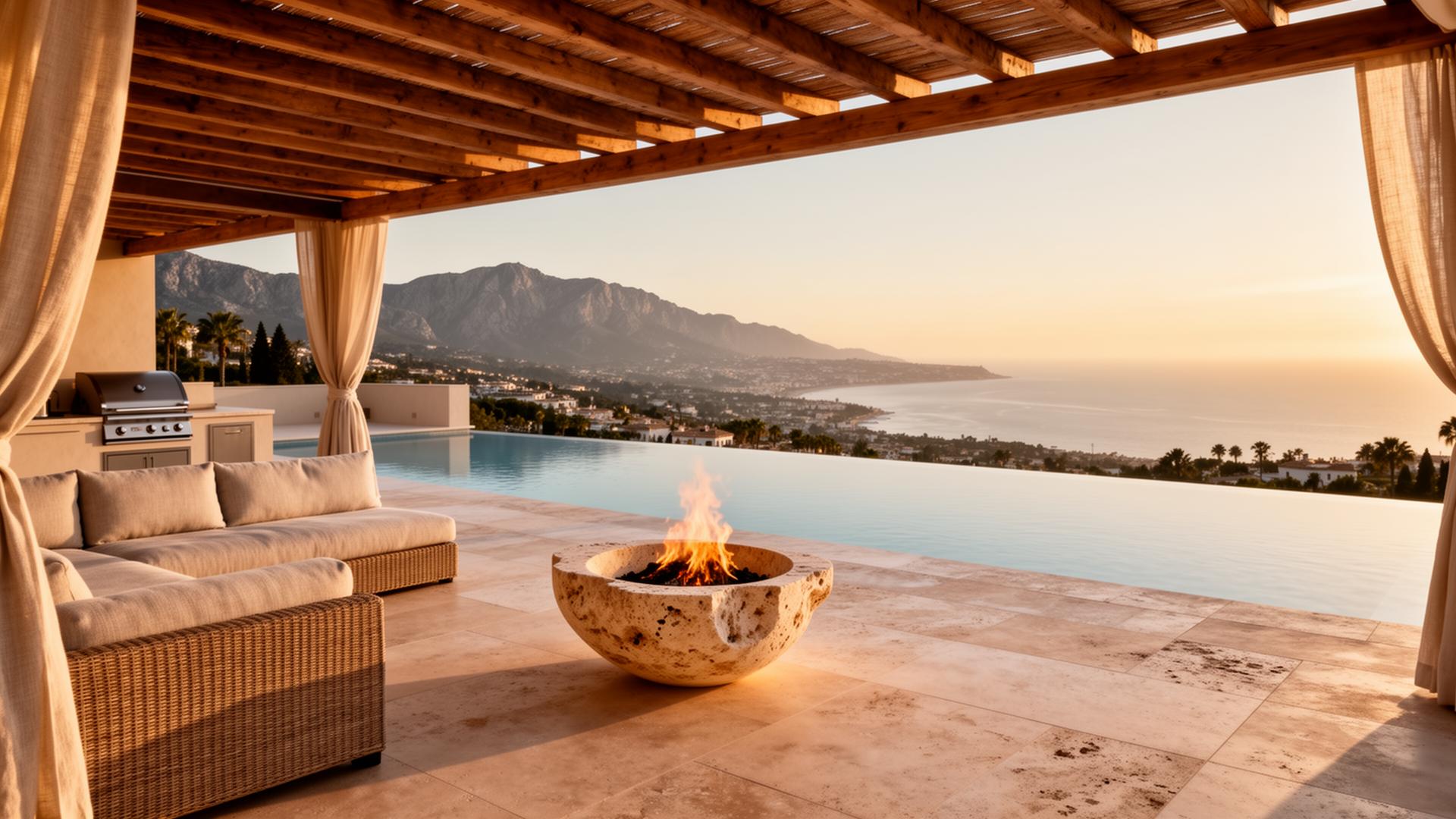
Most infinity pools are designed in plan view. The best ones are designed in section — from the eye-line of someone seated on the terrace.
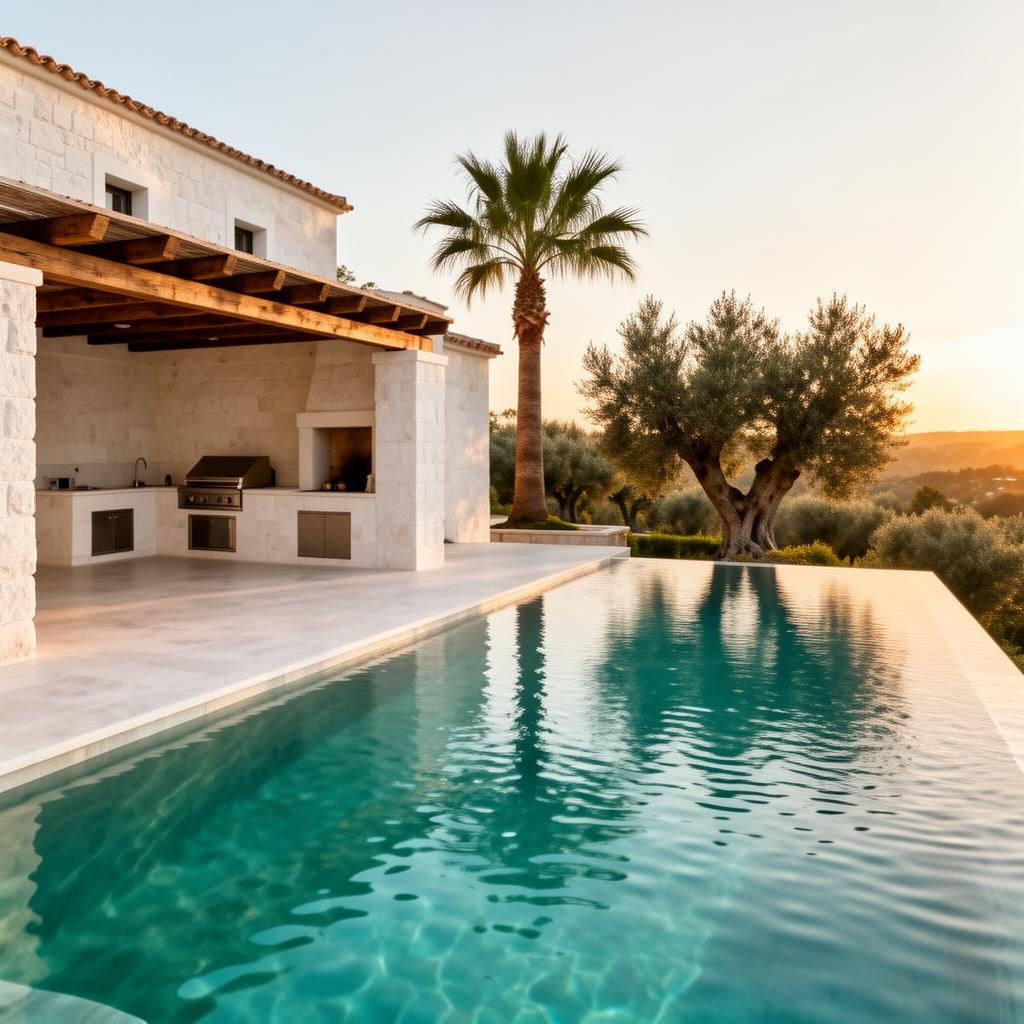
We work with mineral-tone Bisazza glass mosaics rather than the default turquoise, so the water reads as an extension of the sea rather than a competing colour. The coping is detailed at 12mm — thin enough to disappear, thick enough to hold a wine glass.
Sightlines are everything. We model the entire scene before a stone is cut, ensuring the vanishing edge meets the horizon from the principal seating position. Anything else is just a swimming pool.
The colour decision
Water has no colour of its own; the interior finish supplies it. Pale sand and grey-green mosaics read as Mediterranean; deep charcoal turns the pool into a mirror and doubles the sky; standard turquoise reads as a hotel. On a sea-view plot we almost always choose a tone within two shades of the water on the horizon.
What the vanishing edge costs you
An infinity edge needs a balance tank, a second pump running whenever the effect is on, and precise level tolerance across the weir — typically two to three millimetres over the full length. It is worth every euro on the right plot and a permanent maintenance tax on the wrong one. If the terrace has no elevation and no horizon behind it, a level deck-edge pool is the better and quieter answer.
Common questions
- Are infinity pools more expensive to maintain?
- Somewhat. The vanishing edge requires a balance tank and an additional pump running whenever the effect is active, which adds energy use and servicing compared with a conventional skimmer pool.
Planning something similar?
Book a free design consultation.
Thirty minutes with our design team — no obligation, no charge.
Book your consultation →