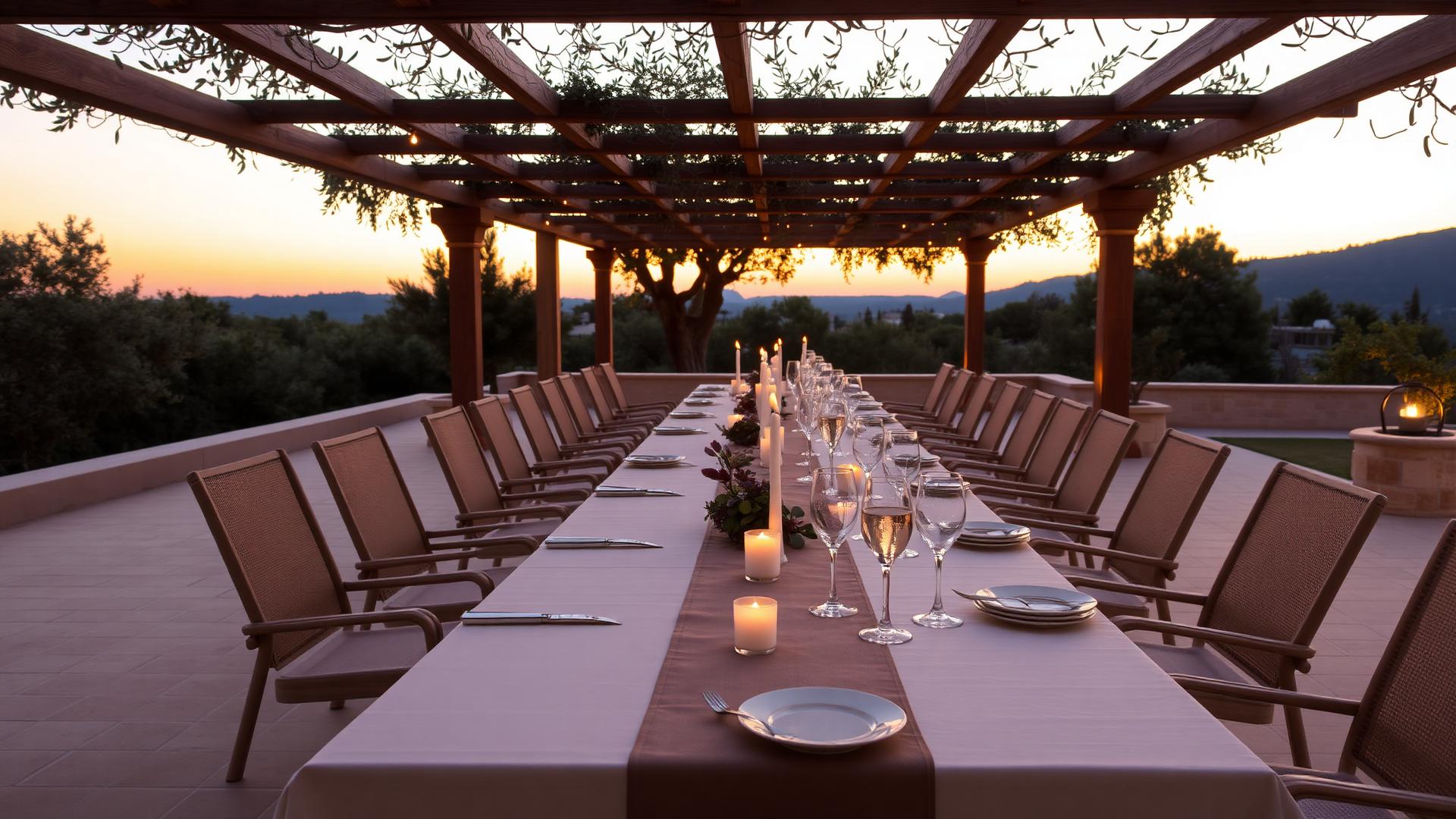
The Quiet Luxury of an Oak Pergola
Hand-cut European oak, mortise-and-tenon joints, and why a pergola should age — not weather.
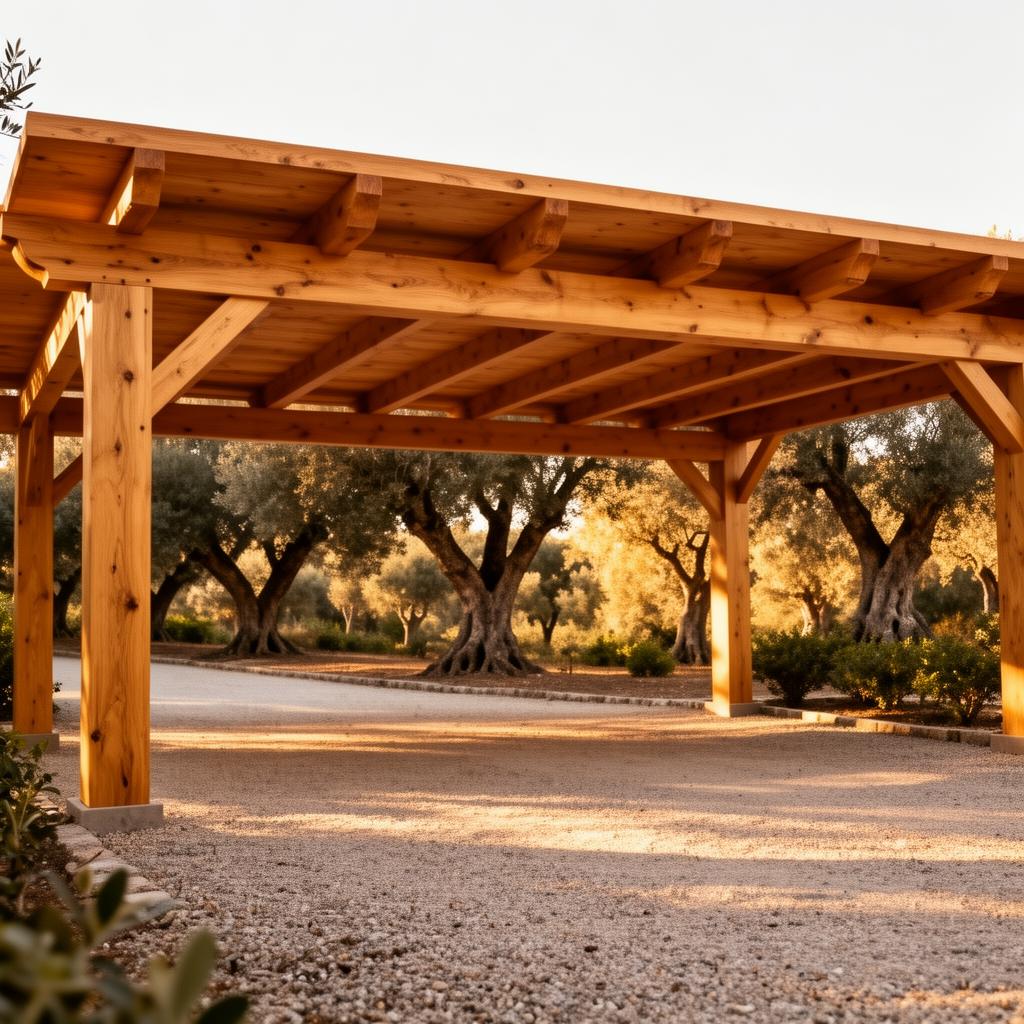
There is a difference between a pergola that protects a terrace and one that defines it. The former is hardware. The latter is architecture.
We work almost exclusively in European white oak, hand-cut and joined with traditional mortise-and-tenon — no visible bolts, no aluminium hidden under stain. The wood is oiled, never painted, so it silvers gracefully under the Andalusian sun.
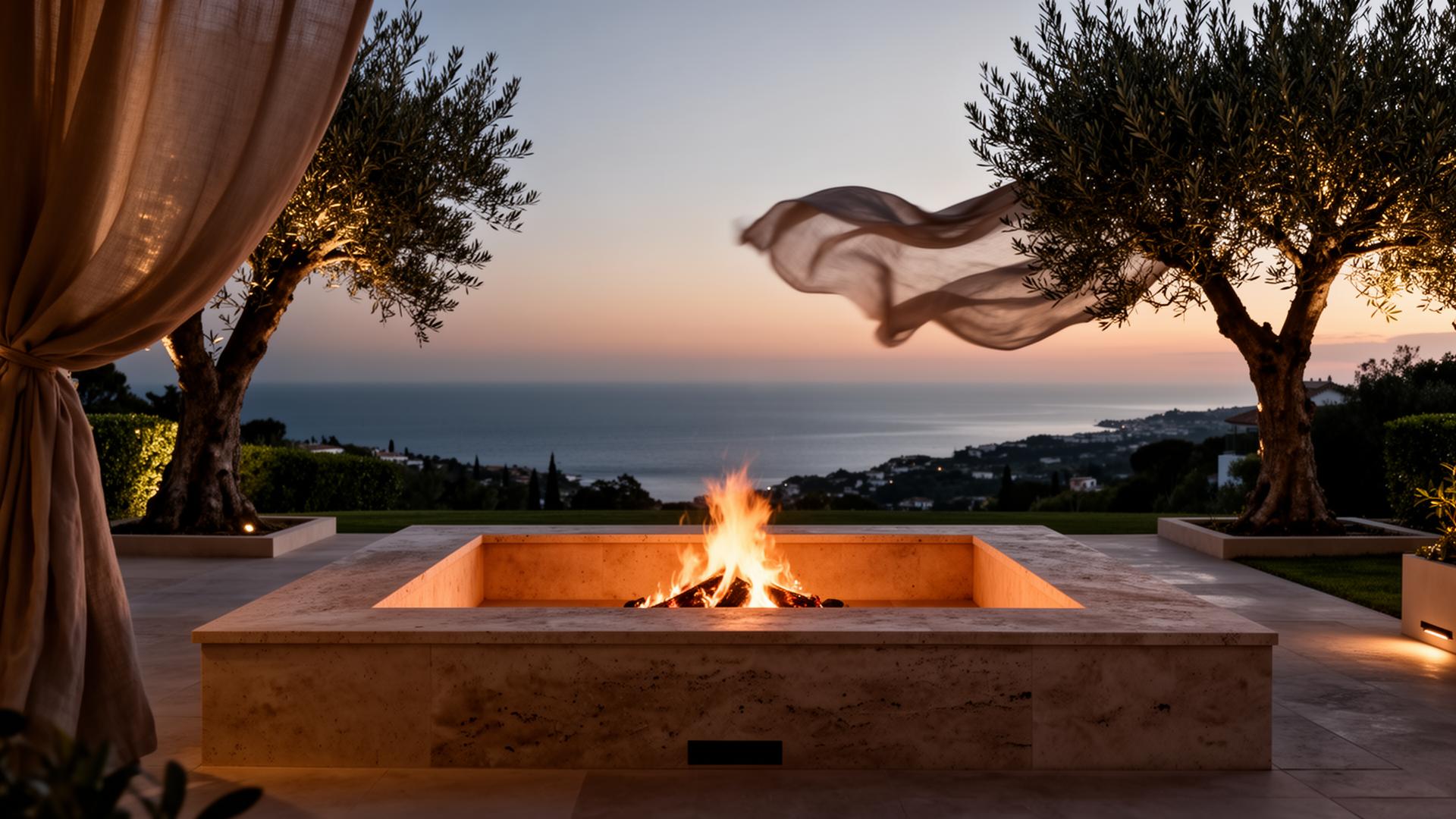
Linen drapes on bronze tracks soften the light without trapping heat. Concealed LED strips wash the underside of the beams at night, turning the structure into a warm room without walls.
Oak versus aluminium
A bioclimatic aluminium pergola offers adjustable louvres and a rain seal, and there are terraces where that flexibility wins. But it will look exactly the same in fifteen years as the day it arrived — which is precisely the problem. Oak moves, silvers, and settles into the garden. On a villa built from stone and lime, it is the only material that keeps pace.
Span, section and shadow
Beam depth is what separates a considered structure from a flimsy one. As a rule we don't run oak beyond a 4.5m clear span without increasing section, and we set rafters at a spacing that throws roughly fifty percent shade at midday — enough to cool the table without making the terrace gloomy in April.
Planning something similar?
Book a free design consultation.
Thirty minutes with our design team — no obligation, no charge.
Book your consultation →