Travertine: The Thinking Person's Stone
Why we choose unfilled, brushed travertine over polished marble for terrace floors.
Marble photographs beautifully and lives badly. On a south-facing terrace it gets hot enough to burn bare feet by 11am and shows every drop of red wine within a season.
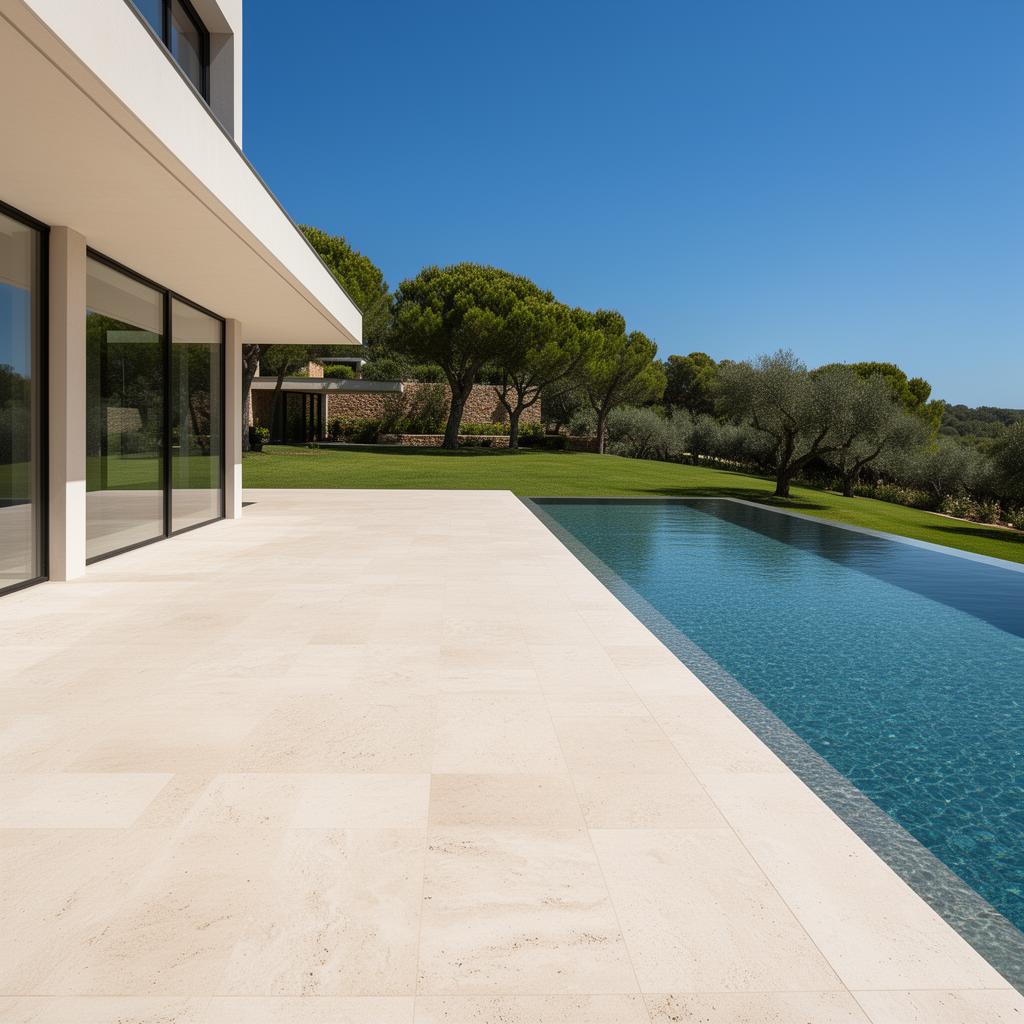
Travertine, brushed and left unfilled, does the opposite. The micro-pores diffuse heat, the matt surface stays cool underfoot, and the natural pitting hides the patina of an outdoor life lived well.
We specify large-format slabs — 80 by 80 centimetres minimum — laid with 2mm joints in matching grout, so the floor reads as one continuous plane from the house to the pool.
Sealing and salt
Around a saltwater pool, travertine must be sealed with a breathable impregnating sealer — never a film-forming one, which traps moisture and blisters. Reseal every two to three years, and rinse the pool surround with fresh water at the end of each season.
Common questions
- Is travertine too hot for a pool surround in Spain?
- No — it is one of the coolest natural stones underfoot. Its micro-porous, matt surface diffuses heat far better than polished marble or dark porcelain, which is why it remains the default choice for Andalusian pool surrounds.
Planning something similar?
Book a free design consultation.
Thirty minutes with our design team — no obligation, no charge.
Book your consultation →